ENDRALON.SPACE · ČLÁNEK
10. 7. 2026
Chapter 5: Radúz
The promenade was different in the morning than in the afternoon. Fewer tourists, less noise, just locals hurrying by with shopping bags and waiters setting up outdoor tables for later hours. The sun hung low over the harbor, but its heat was already sharp. Petr walked alone. Žaneta stayed at the hotel. She was reading, or sleeping, or doing both at the same time. Markéta had left before nine, tapping briefly on the room door and [...]
The promenade was different in the morning than in the afternoon.
Fewer tourists, less noise, just locals hurrying by with shopping bags and waiters setting up outdoor tables for later hours. The sun hung low over the harbor, but its heat was already sharp.
Petr walked alone.
Žaneta stayed at the hotel. She was reading, or sleeping, or doing both at the same time. Markéta had left before nine, tapping briefly on the room door and saying she would be back by lunch. Petr nodded. Then he went outside, because the room felt uncomfortably quiet.
The phone in his pocket remained silent.
He walked along the railing toward the harbor. He passed a café with five outdoor tables, a grocery store whose goods half spilled onto the pavement. Near the waterfront, an old man sat reading a newspaper. The pages fluttered slightly in the wind.
He stopped by the low set of steps leading down to the rocks.
And there he saw them.
Markéta was sitting on a stone ledge about ten meters away from him. Next to her stood a young man—taller, dark hair, light-colored t-shirt. They were talking. Markéta was laughing. Not loudly, more in a way that she leaned forward slightly and then straightened back up.
Petr didn't move.
The young man leaned one hand against the stone behind Markéta and was showing her something on his phone. Markéta leaned toward the screen. Their shoulders almost touched.
Petr guessed his age. Eighteen, maybe nineteen. Karimah wasn't there.
He walked over to the wall opposite and leaned against it, as if he wanted to look at the marina. The harbor could be seen well from here. Markéta and that boy too.
He watched them.
The young man said something, and Markéta nodded. Then she said something, and the young man laughed. There was a certain naturalness to it that Petr couldn't quite put his finger on. They didn't act like two people who were just getting to know each other. They moved alongside each other with ease, without any visible effort.
Markéta pulled her knees to her chest and remained sitting like that. The young man lay down on his back on a rock, his hands folded under his head, and stared up at the sky.
Just because.
Petr pushed away from the wall and walked further along the promenade, away from the stairs. He wasn't in a hurry. He didn't look like he was leaving. He was just keeping on.
He thought about when he had last seen Markéta out like this, in the heat, with a stranger. Not at home during a family dinner, or walking down the hallway from the bathroom to her room. Like this. Just with a stranger.
Had Žaneta told him about him? Or was it Markéta? He only remembered a snippet of conversation by the harbor and a name that he had let in one ear and out the other back then.
He reached a small fountain at the end of the promenade and stopped. He ran his palm along the edge of the stone basin. The water inside was green with algae.
Yassin.
That was his name.
He looked like an Algerian. Or a Moroccan. It wasn't easy to tell from a distance, and it didn't matter anyway.
Petr pulled out his phone and looked at the screen.
Nothing.
He put it back away.
He should have gone over to them and said hello. Casually, just like that. A father out for a walk who happened to spot his daughter. It could have been like that. It should have been like that.
Instead, he stayed standing by the fountain and looked at the boats in the harbor.
She didn't need him there.
That was what struck him more than anything else. It wasn't danger or a disturbing scene. It was just a morning on the rocks with a boy Petr didn't know and probably never really would.
Markéta was laughing. She was leaning over her phone. She was listening to something Yassin was telling her. And none of it was meant for him.
Simply put, someone else was there.
He turned and headed back to the hotel by a different street.
The sun burned the back of his neck.
* * *
Valletta was full of tourists at two in the afternoon.
Petr walked beside Žaneta through the narrow streets climbing up from the harbor. The paving stones underfoot were old and uneven, in places worn down by the summer rush of feet. Žaneta wore a light linen dress and carried a shoulder bag. She walked slowly, stopping by shop windows and looking into café windows.
“We haven’t been here yet,” she said.
“Next time.” Petr slowed down to match her pace. “We didn't have time last year.”
Žaneta looked at him.
"Yeah?"
"I had a lot of meetings back then."
She nodded and kept going. She didn't ask any questions. Petr didn't think about it.
They walked past the church with its massive doors. Žaneta stopped and let her gaze sweep over the facade. Petr waited. The sun beat down on the top of his head.
"Are we going inside?"
“I don't want to.” She walked off again. “I was just looking.”
They found a café in the partial shade, two alleys off the main street. Four tables outside, people sitting at two of them. Žaneta chose the furthest one. Petr sat down opposite her and put his phone on the table.
The waiter came as soon as they sat down. Žaneta ordered iced tea, Petr coffee.
“Did you see Markéta today?” Žaneta asked once the waiter had left.
„Ráno. Odcházela brzo.“
„He writes that he'll be for dinner.“ Žaneta shifted her handbag to the other side of the armrest. „I suppose he's spending time with that boy.“
„With Yassin.“
Žaneta looked up.
"You know him?"
"I caught a glimpse of them this morning on the embankment."
„And?“
Petr shrugged. The waiter brought the drinks. Žaneta grasped the glass with both hands and rested her elbows on the table.
“It's normal,” she said. “He's seventeen.”
„I know.“
„Peter.“
He looked at her.
„I know you know.“ She smiled, just like that. „I'm only saying it out loud because sometimes you feel the need to think things over at night, and nothing ever comes of it anyway. You'd be better off getting some sleep.“
Petr tapped his feet, sipping his coffee.
A group of tourists with maps in hand walked down the street. One of them was gesturing, while the others looked at the signpost. A moment later, they disappeared around the corner.
„Do you like it here?“ Petr asked.
„As always.“ Žaneta looked around the street. „I do. Malta is strange. You walk down a street for the first time and still feel like you've seen it somewhere before.“
Petr listened to her.
„Like that fountain by the harbor,“ she continued. „I completely forgot it existed. And then I saw it this morning and it was as if I'd known it forever.“
„I remember it.“
„You remember everything.“ For a moment she paused to consider it herself.
Petr looked at his phone. The screen was dark.
Žaneta finished her tea and left the glass on the table. She looked out into the street. Her expression was relaxed, almost sleepy. She didn't look like she was worrying about a thing. She was just sitting in the cafe shade in Valletta, resting.
Petr realized that for the past three days he had been watching her like someone who was about to say something crucial at any moment. He was waiting for a tone of voice, a sudden silence, a look that would last a second longer than usual. He was looking for a code in her behavior.
Žaneta traced her fingers along the edge of the table. She didn't seem to be thinking about anything in particular.
„Would you like another one?“ she asked, pointing to his empty cup.
“Yeah.”
„Me too.“
She raised her hand for the waiter.
Petr put his phone in his pocket.
* * *
Evening. The hotel lounge.
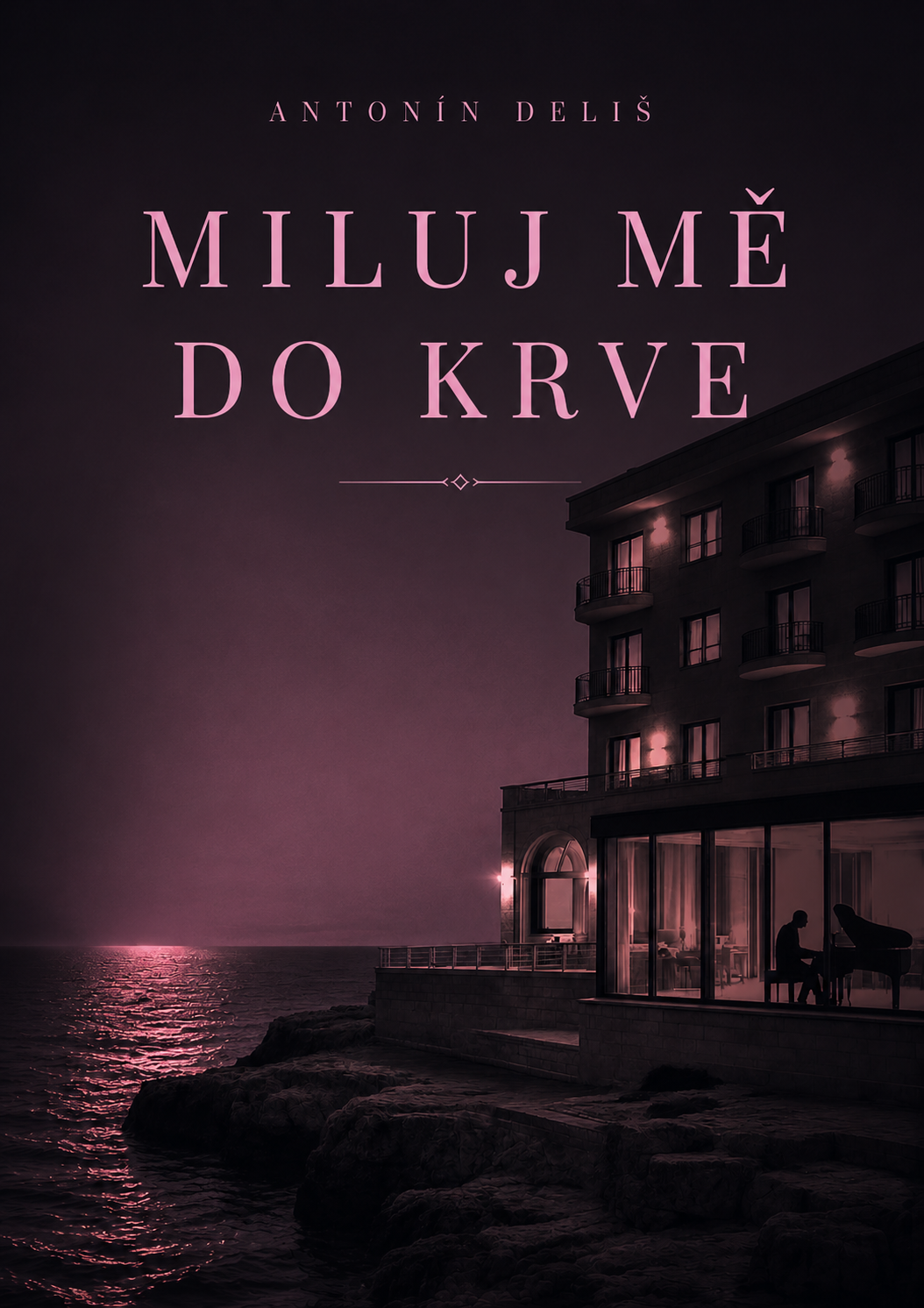
At eight, the lounge was full of different people than during the day.
During the day, tourists came here for coffee and breakfast, sat by the windows with guidebooks or laptops, and left after an hour. In the evening, the room transformed. The tables moved closer together, the lights dimmed, and bottles appeared behind the bar that hadn't been there in the afternoon. People came without plans. Or with one plan—to stay.
Petr chose a table by a pillar near the center of the room.
Žaneta and Markéta had gone upstairs after dinner. Markéta said she wanted to call Karimah. Žaneta said she wanted to read. Petr said he would stay downstairs for a bit. No one asked any questions.
He ordered a beer and looked around.
At the bar, three men in shirts were standing and speaking German. Two women in the corner were gesticulating over a shared phone screen. Near the window sat an older couple quietly, each of them watching the room in their own way—the man the bar counter, the woman the terrace door. On the terrace there were ten or fifteen people, maybe more, their voices filtering in here like a distant conversation in the next room.
Radúz was sitting at the piano.
He had been playing ever since Peter arrived. Or he had been playing earlier and Peter didn't know about it. In any case, the piano wasn't playing by itself. Radúz's hands moved calmly, with pauses that had a rhythm of their own.
Peter took a drink.
Then Radúz began to sing.
The intro was slow. Just the piano, then a voice that arrived without blushing — low, a bit dry at the start of the sentence, different from last evening. Not Polygot with his momentum and room-filling laughter. This was quieter.
Once a year I buy a flight to the city where your breath mixes with salt.
Petr froze.
He took another sip and looked away. At the bar counter. At the men in shirts. At a woman who had just taken off her sandal and was examining her sole with a concentrated expression, as if she were solving a complex technical problem.
Radúz kept singing.
You promise nothing, just the key to the flat and a quiet "come after dark".
Petr knew that song.
He had heard it last year. Radúz had played it for him one night on the terrace when the lounge was empty and the candles on the tables were burning out one after another. Back then, Radúz didn't belong to anyone else. Back then, he played only for him.
And now he was playing that same song for a room full of people.
Petr glanced around the lounge.
An older couple by the window was listening. The man turned from the counter toward the piano and the woman stopped watching the door. They sat quietly and looked at Radúz.
What did they hear?
Petr had never paused to think about it. About what the exact same sentence does to different people.
By day I am a tourist passing through your streets in a foreign T-shirt, by night I am a return that breathes down your neck and searches for your half of the bed.
The woman at the bar stopped looking at her phone.
The man to the right of Petr brought the glass to his lips, but did not drink.
The room had not changed. People were still sitting where they had been sitting, continuing to talk or remain silent according to their habit. Only the tempo of these movements had slowed down imperceptibly. Like when it starts to rain outside and people under the awning draw a little coffee from the cup onto their tongue.
Petr realized that a song does not have to mean the same thing to everyone who listens to it.
For that woman by the bar who put her phone down — perhaps in it she heard someone who once left her waiting. For the older couple by the window — perhaps an old departure, an airport, a hand in a taxi. For those three men behind him who stopped speaking German — perhaps nothing specific, just a melody that hit the right moment.
Sometimes I scare you when I say in my half-sleep that I'll die first.
Petr placed his hand on the table.
Tahle věta.
He told her once. Truly. At night, around half-past one or two, when he finally let go of the control that had held onto him all day.
Radúz was silent back then. For a long time. Then he turned on his side and said something Petr couldn't quite remember anymore, but it sounded like an answer to things that were yet to happen.
And now it had become a song.
Petr didn't know if she was for him. Or he didn't want to admit it to himself.
He didn't know whether Radúz was singing a story, or whether Petr was piecing that story back together from fragments that didn't even belong to each other.
We are quiet lovers between time zones, only the night and the dawn belong to us.
Behind Peter's table, a waitress walked past and replaced the ashtray with a clean one. The room hummed on with its own life and Peter sat inside that hum and thought.
An older woman by the window rested her head on her hand.
One of the men at the bar pulled out his phone, read a message, put it back down and returned to his glass.
Radúz was singing.
You hide me among old messages and photos in folders, I let you out into stories that begin with "a boy" and never end with your name.
Peter looked at him. He has the courage. To sing things as if he saw them with his own eyes. As if Radúz had borrowed Peter's perspective for a moment and was trying to sing through it—looking at himself the way Peter might look if he knew how to say it. It was strangely liberating to look at one's own life through someone else's voice. Almost as if it lent him a detachment he had never found on his own.
Yes or no.
That question had been sitting in Peter from the very first moment he heard the first measure. Yes, that song is about him. Or no, he's just projecting, because everything on this island he reads through the lens of himself.
He couldn't decide.
And precisely because of that, he kept sitting.
Radúz wasn't looking in his direction. He played with his gaze resting slightly above the keys, as if watching a point in the air that didn't exist.
I am your secret in your pocket, you my public confession without the details that I keep only for my pillow.
The man at the bar moved. A friend came up to him, they slapped each other on the shoulders and began to talk. The silence around the piano woke up slightly. Someone from the group on the terrace laughed out loud.
Peter realized he was gripping his glass.
He relaxed his fingers.
Radúz was coming to the end and the room didn't know it. It scarcely knew it was listening. People continued with their conversations, their glasses, their evenings. And yet something in their movements had slightly changed. Imperceptibly.
Like water that is half a degree warmer.
And I know that even if I were to see you only once a year…
The voice hadn't raised. Radúz didn't grow louder, didn't slow down, didn't add emphasis. He continued just as he had from the beginning — calmly, without ostentation, like a person who is stating something they have long known and don't need anyone to confirm.
…I always find my way back to those quiet sentences of yours, in which you hold me a little longer than is safe.
The final measure faded out and a silence remained that lasted a second longer than usual.
Then came the applause.
Scattered, sincere, not at all exaggerated. A few people on the terrace tapped on their glasses. An older couple by the window applauded quietly, each at their own pace.
Radúz bowed.
Briefly. Almost formally.
And moved on to another piece.
Petr stared at the table in front of him.
A glass. A beer mat. The wooden surface with a small scratch under his left elbow.
He didn't know if that song had been meant for him.
He knew he had no way of finding out who it actually belonged to.
* * *
Radúz finished playing the piece and closed the piano lid.
Petr remained seated.
The room around him slowly came back to life. Voices returned to their original volume, someone at the bar called out to a waiter, two women in the corner laughed at something on a phone. It was as if the silence around the piano was only allowed to exist for the duration of a single song and was now dissolving back into an ordinary hotel evening.
Radúz stood up, moved his chair toward the piano and headed to the bar. The bartender handed him a glass of water without asking. He took a drink, stood still for a moment and then turned around.
Their gazes met.
This time, he came.
„May I?“
Petr pointed to an empty chair.
Radúz sat sideways as if keeping open the option to get up and leave at any moment.
For a moment, both of them remained silent.
„You came to both performances,“ he finally said.
“Yeah.”
Radúz smiled slightly.
„That surprised me.“
„Why?“
He toyed with his glass for a moment.
„I don't know. I thought you wouldn't come.“
He said it as calmly as if he were talking about the weather or a flight that might have been delayed.
Petr wasn't sure what he was actually hearing in that sentence.
„That was my first time hearing Polyglot live.“
"Yeah?"
“Yeah.”
Radúz gave a short laugh.
„Well, I've owed you that one for a long time.“
Petr nodded, even though he wasn't quite sure how to apply the song to himself.
„And the other one?“
„Which other one?“
For a moment, they looked at each other.
Radúz then lowered his eyes to his glass.
„I write things,“ he said. „Sometimes a song comes out of it.“
„I know.“
„And then I play them.“
He didn't continue.
The waitress stopped at their table and asked if they wanted anything else. Petr ordered a beer. After a brief hesitation, Radúz nodded that he would too.
When she left, silence remained between them.
Petr was getting used to it. It wasn't unpleasant. Quite the contrary. He just never fully trusted it. Such silence could turn into anything within a single sentence.
„How much longer are you going to be here?“
„Until Friday.“
Radúz nodded.
„That'll fly by.“
Then he looked toward the window, where a group of tourists was just walking past.
"And how does it work?"
"All right." Petr paused for a moment. "Markéta made friends here."
"That's good."
Petr smiled slightly.
„You use that sentence all the time.“
„Which one?“
"That's good."
Radúz laughed.
„Because most things are either good, or they aren't.“
„That's deep.“
„You think? Then I guess the problem is solved.“
The waitress brought the beers.
Radúz watched the foam on the surface for a moment, as if it interested him more than the conversation.
“You look tired,” said Peter.
“I am.”
“A lot of work?”
“About like every summer.”
He took a drink.
Petr waited.
Nothing more came.
Behind their backs, someone pushed a chair away. The patio door opened and warmer air from the sea drifted inside.
“You played it differently last year,” Petr said after a moment.
Radúz looked up.
“Could be.”
“I heard it differently back then.”
A corner of Radúz's mouth twitched.
“That's possible too.”
Petr smiled slightly.
Radúz didn't.
“You didn't play it for the room last year.”
This time he leaned back.
„No.“
“And today?”
He raised his glass.
“Today I played it for the room.”
The answer was precise. Perhaps too precise. The kind that was true and yet explained nothing.
Petr accepted it because he had no other choice.
They sat for a while longer.
Then Radúz looked toward the door.
„I should go.“
„Right.“
He stood up.
They shook hands.
Briefly.
„Good night.“
„Good night.“
Petr remained seated for a few more seconds after he left.
On the table remained a glass from which Radúz had drunk barely half.
He looked at her and thought about the song.
An old thing. A new thing.
To rewrite means something was there.
It doesn't mean a person will recognize what remained.
* * *
The room was silent.
Žaneta was sleeping. Markéta too.
Petr quietly closed the door and changed in the dark bathroom so he wouldn't have to turn on the light. When he lay down on his side of the bed, for a moment he just listened to the steady breathing of the woman beside him and the distant hum of the air conditioning.
Radúz wasn't cold.
That was the first thing that occurred to him.
He had expected something else. More distance. Shorter answers. A look that would make it clear he had arrived late or shouldn't have come at all. Instead, Radúz had pulled up a chair on his own. He sat sideways to the table, with water in his hand, cautious as always, but not closed off.
I thought you wouldn't come.
Petr heard that sentence again.
There was no reproach in it. There wasn't even any joy. Just a simple statement that might have faded away in anyone else's mouth.
Only it didn't fade.
He had been returning to it ever since he left the lounge.
I was thinking.
The word had gotten stuck in his head. It meant contemplation. Expectation. Some sort of space between possibilities.
Or at least, that was how Petr interpreted it.
He knew that a person could put more into a single sentence than was actually in it.
And yet he kept returning to it.
It gave him more pleasure than it should have.
He knew that too.
He took his phone from the bedside table.
The display illuminated the ceiling for a moment. Žaneta didn't move.
Petr skimmed through the messages.
Nothing from Radúz.
He wasn't surprised. Radúz wasn't the kind of person who wrote just to fill the silence between two days.
He scrolled further.
The boss.
The last message was five days old.
I will confirm.
Nothing more.
No deadline. No change. No apology. Not even a brief "I'll get back to you later".
Petr turned the phone face down.
A car drove past outside, briefly illuminating the ceiling with a moving glow.
He lay staring into the dark.
He realized how much energy he had devoted to Radúz over the past few days. To a single sentence. To his songs. To a few glances across the room.
And yet the person he had partly come to Malta for had been silent for five days already.
That was strange.
More than he was willing to admit.
He closed his eyes.
He saw him, spoke with him, heard him.
The boss was just an empty space on the phone.
And empty spaces are sometimes more spectral than answers.