ENDRALON.SPACE · ČLÁNEK
11. 7. 2026
Chapter 14: I had to go to my mom's
Petr opened his eyes and for a few seconds didn't know where he was. The room was gray, the blinds drawn, the air motionless. Žaneta was sleeping on her side of the bed, turned toward the window. Nothing could be heard from the next room. The phone was lying on the nightstand. The screen was lit up. Radúz. Petr reached for it before he even realized he had moved. Sorry. I had to go to my mom's. She wasn't feeling well. […]
Petr opened his eyes and for a few seconds didn't know where he was. The room was gray, the blinds drawn, the air motionless. Žaneta was sleeping on her side of the bed, turned toward the window. Nothing could be heard from the next room.
The phone was lying on the nightstand.
The screen was lit up.
Radúz.
Petr reached for it before he even realized he had moved.
Sorry. I had to go to my mom's. She wasn't feeling well.
He read the message once.
Then again.
Then once more, more slowly, word by word.
Sorry.
I had to leave.
To my mom's.
She wasn't feeling well.
Nothing more.
No long apology. No explanation. No hidden meaning to be fished out from between the sentences. Just a short message from a man who left because he had to leave.
Petr sat up.
The bed beneath him creaked quietly. Žaneta didn't move.
For a moment he held the phone in his hand, staring at the screen until the letters began to blur.
So he was in Gozo.
Or with his mother.
Or somewhere in between.
Paper ferries. Medication in three rows. A box with a blanket by the shelf. A photograph of a woman on a stone wall.
Everything was there.
He had it all ahead of him.
And yet he turned it into something else.
He got up carefully so as not to wake Žaneta, and went out onto the balcony. He closed the glass door behind him leaving just a crack.
The sky above the sea had a lighter edge, but the street below the hotel remained grey. A supply car drove along the promenade and disappeared around the corner. The air was cooler than in the evening, but only slightly.
Petr sat down on the plastic chair.
He held the phone in his hand.
The message was still there.
She wasn't feeling well.
That was all.
And at the same time, it was enough to shift the last few days somewhere else.
An empty piano.
Unread messages.
Blue doors.
Drawn blinds.
Everything that had seemed to him like a sign could suddenly be read differently. Not as a farewell. Not as a punishment. Not as silence meant for him.
As an ordinary departure.
Ordinary worry.
An ordinary life, the kind Radúz had even in the moments when Petr sat in the hotel room and waited for the green dot.
Petr ran his palm across his face.
He should have felt relief.
He partly did.
But beneath it lay something else.
Shame.
Quiet, precise, unpleasantly practical. Like realizing you’ve been raging at a door that wasn’t locked the whole time.
He wrote a reply.
I’m sorry to hear that. Is she okay now?
He looked at the sentence for a moment.
Then he sent it.
The message status changed to delivered.
Unread.
Petr placed the phone on the small table and looked out at the sea.
The surface was calm. The boats in the distance stood almost motionless. From the street below came the sound of a metal cart being pulled over cobblestones, and then silence again.
Radúz had written.
The explanation was ordinary.
And suddenly Petr didn't know whether that reassured him more or less.
Because if Radúz had simply gone to see his mother, if he really just hadn't been keeping up, if the whole time nothing of what Petr had imagined was happening, then another question remained.
Why he had believed it so easily.
Why the empty lounge had been enough proof for him.
Why an unread message was enough for him as a verdict.
Why it seemed easier for him to imagine Radúz's disappearance than his ordinary life.
Behind the door of the room, Žaneta stirred. The bed creaked quietly.
Petr didn't turn around.
He sat on the balcony and waited for dawn.
* * *
The late afternoon was peaceful on the rocks.
Petr sat down on a rock about thirty meters away from them. Far enough not to hear the words. Close enough to see.
Markéta and Yassin stood by the water. Yassin was saying something and gesturing with his hand toward the open sea. Markéta looked where he was pointing. Then she nodded. Then she said something short and Yassin turned to her and replied.
Petr watched them.
He had come here without a plan. He walked along the promenade, then down the steps, then further along the stones, and only when he sat down did he realize where he was and why. He could have left. He could have turned around and gone back to the hotel, where a beer, air conditioning, and an empty room were waiting for him.
He remained seated.
Markéta bent down and picked up a stone. She examined it, then put it back. Yassin watched her and then reached down for a stone next to his shoe himself. He showed it to Markéta. She took it in her hand, turned it in her palms, and gave it back to him.
No drama.
Only two people on the rocks in the afternoon.
Petr ran his palm over the cool surface of the stone beneath him. It was rough and dry in the spots where the sun had baked it, and darker where it hadn't yet reached. The sea crashed against the shore in a steady rhythm, and between each wave there was always a brief silence.
Yassin turned his back to the sea and jumped down onto a lower rock. He turned back to Markéta and held out his hand. Markéta took it and jumped down after him. She didn't hold it any longer than necessary.
Petr saw it.
He didn't put any story into it.
Or he tried to.
Markéta laughed at something Yassin said and covered her mouth with her hand. Petr knew that gesture—she had been doing it since childhood, whenever she laughed more than she wanted to show. He knew about it. And yet it stopped him.
She didn't know that about herself.
Or she knew and didn't care.
They now stood side by side on a flat stone, looking at the water. Yassin put his hands in his pockets. Markéta narrowed her eyes against the sun. Nothing happened, and Petr watched them like a person reading a book no one gave him.
Radúz's message from the morning was still lingering somewhere beneath the surface of the day.
I had to go to my mom's.
A plain sentence.
All week he had been manufacturing a disaster out of nothingness, and reality arrived in a few words.
Markéta bent down and reached her hand into the water. She immediately pulled it back and shouted something. Yassin laughed. Markéta shivered and laughed too.
Petr watched them for a moment.
Then he stood up.
He turned around and walked back.
* * *
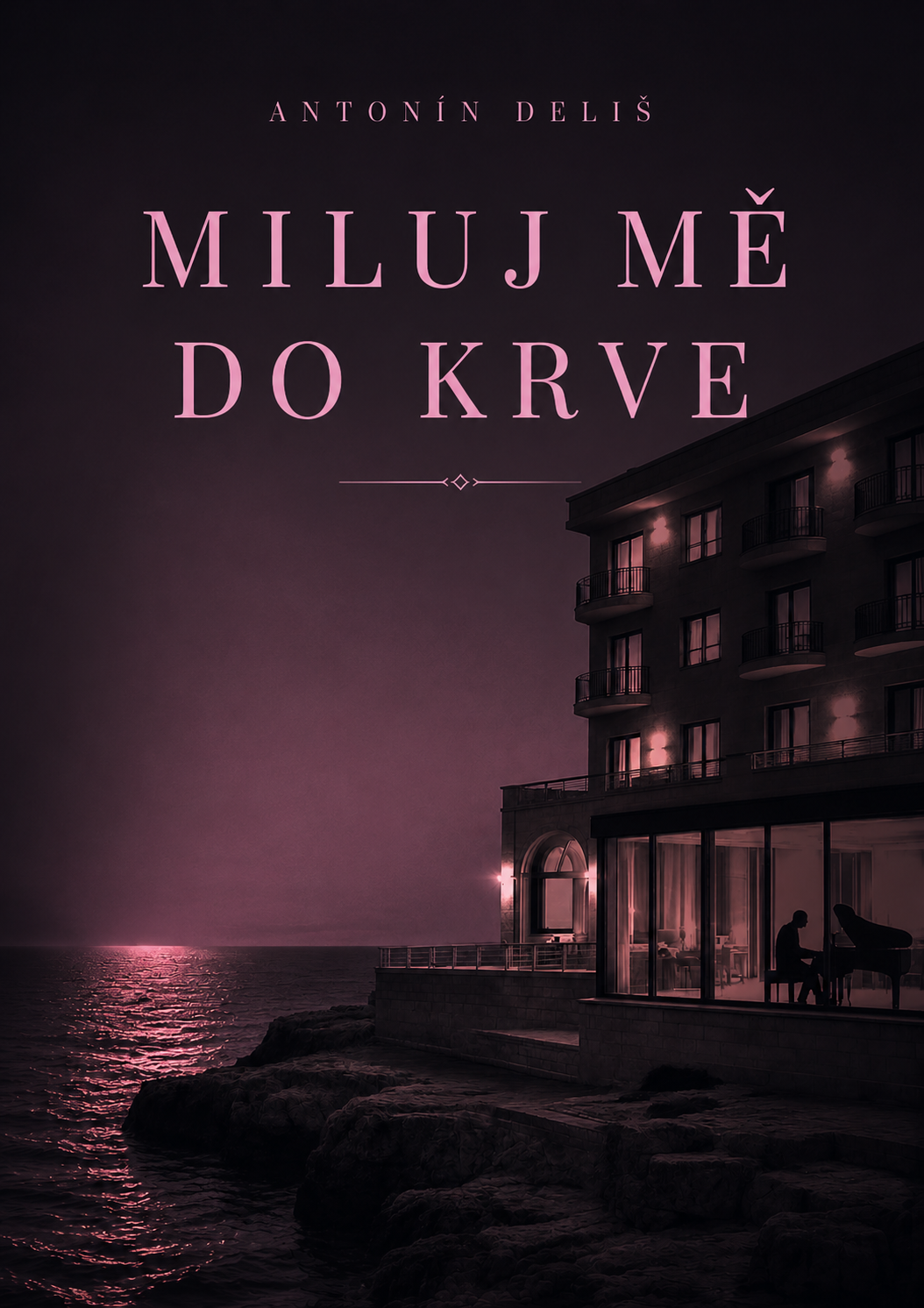
Petr arrived earlier than usual. The room was half empty. The guests coming for the evening program had not yet arrived, and the afternoon ones had already left. The waiter was moving the tables a bit closer together, as is always done when evening comes. By the window, a woman sat alone with a book and a glass of white wine.
The piano stood in its place.
Zavřený. Tichý.
Petr sat down at a table by the pillar and ordered a beer, which arrived quickly and cold. He took a sip. Outside the window, there was still light, but different from midday—flat, a bit tired, the kind that says the day is almost over.
He looked at the piano.
There was no desire in it.
Not this time.
It was just a statement of fact. Radúz is not there. Radúz is on Gozo. With his mother, who was not feeling well.
These things happen.
Petr knew this, and at the same time he realized how many days it had taken him to accept it as a simple fact instead of a mystery.
He took out his phone.
Radúz's message had been sitting there all day.
Sorry. I had to go to my mom's. She wasn't feeling well.
Beneath it was Petr's reply.
I’m sorry to hear that. Is she okay now?
Read. No reply.
Petr stared at the message for a moment. Then he swiped his thumb to the end of the conversation and began to type.
He didn't start with a sentence about his mother. He didn't start with an apology. He wrote a single sentence, simple and short, and looked at it for a moment before sending it.
I'm glad you reached out.
Sent.
The message changed to delivered.
Petr placed his phone on the table face down and took a drink.
The green dot didn't appear.
He didn't mind.
Or he minded less than in the morning. Less than yesterday. Less than all those evenings when he sat here or on the balcony or in the middle of an empty room, waiting for the screen to light up.
The lounge was slowly filling up. Four people arrived together, loud, in vacation shirts. Behind them a middle-aged couple, quiet, each on a different side of the table. A waiter brought the menu to an empty table by the terrace.
Petr looked around.
The room around him breathed at its own pace.
The piano stood closed and empty.
Petr ran his palm across the tabletop.
He thought of the apartment. Of the photograph. Of the woman on the stone wall who was not looking at the camera. Of the list of ferries dated last week.
You didn't ask.
It was a sentence that stayed with him.
The phone on the table did not vibrate.
Petr realized this only after a moment and only then understood that he hadn't even been expecting it. He sat in the lounge, drank beer, and didn't count the seconds between messages.
That was for the first time during his entire stay.
He finished his glass.
The waiter came without asking.
„Ještě jedno?“
„Děkuji, ne.“
He took the phone from the table.
The message remained delivered.
Petr closed the conversation.
He stood up.
As he walked past the piano, he didn't look at it.