
About Costumes, Death, Patina, Golden Veins, a Small Budget, and an Outfit for Book World
If someone asked me about my fashion inspiration, I probably wouldn't know what to answer for a long time.
Fashion in the ordinary sense has never interested me much. I don't think in terms of brands, seasons, trends, capsule wardrobes, and writers in safely fitted jackets. Most of the time, I'm not interested in what's currently being worn.
Instead, I'm interested in what clothing can carry.
And in that, I have one single, great reference.
Sharon Gilham.
British costume designer who worked on the second and third seasons of the series The Wheel of Time.
Sharon Gilham – official website
For me, however, she isn't just a name in the credits.
I met her on the set Wheel of Time, where I worked as an extra. I've already written about that experience on my website: about Tanchico, about being an extra, about the sex worker costume, the unbuttoned and slightly smudged shirt, black-painted nails, glued-on mustache, long hair, veil, and the detailed work of the makeup and wardrobe departments.
My article "Tanchico: Intrigues on Set, a Story on Screen“:
This is important to me.
Sharon Gilham is not an abstract fashion inspiration. She is not a picture from Pinterest. She is not a mood I retroactively attached to my own outfit to make it look more elevated.
She is a name connected to physical experience.
I was on set. I was in the system of costumes, makeup, weathering, dirt, adjustments, waiting, detail, and a body that momentarily becomes part of a foreign world. Not the main character. Not the star. Just one body in the crowd. But even that is enough to understand that a costume is not just clothing.
A costume is an agreement between the body and the world.
What fascinated me during filming was that garments are not supposed to look new. They are not supposed to look like something pulled off a rack. They have to pass through the hands of people who give them a past. Smudges. Scuffs. A trace. A patina. Every detail is meant to create the illusion that the person truly lives in that world, that they leaned against something, walked somewhere, belonged to someone, survived something.
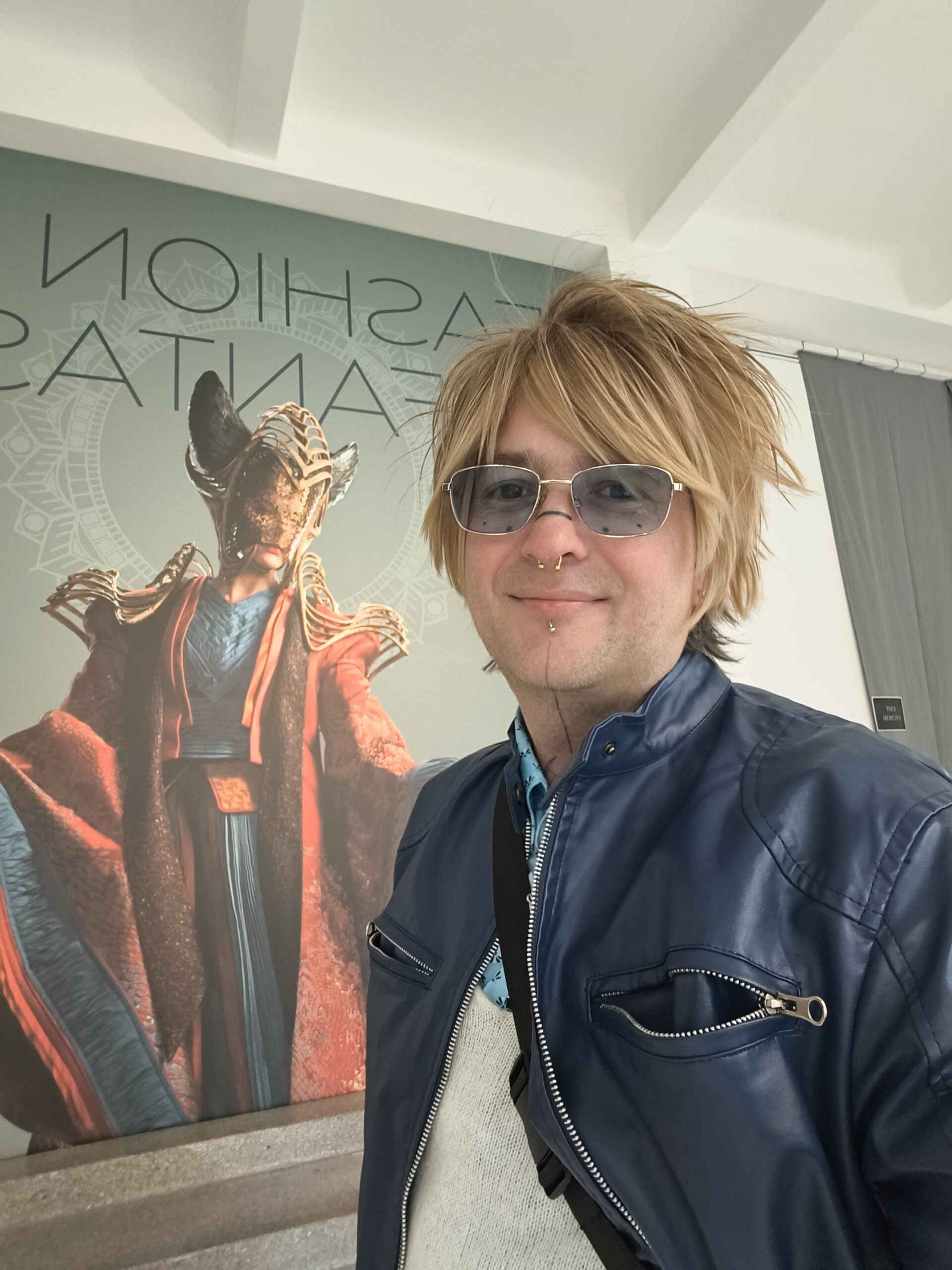
Later, I visited the exhibition Fashion & Fantasy / Sharon Gilham in Prague's Mánes. It wasn't a quick gallery visit for me. I spent a lot of time there. I have my own photos from there. I looked at the costumes up close: the layers, seams, embroidery, appliqués, leather, metal, masks, jewelry, silhouettes, and all those things you only catch a glimpse of in the series, but which actually represent hours and hours of human labor.
The Mánes Gallery described the exhibition as an opportunity to view up close more than eighty visually elaborate costumes from the series The Wheel of Time by Amazon/Sony; many of them, according to the description, reached the level of haute couture and showcased a wide range of techniques: textiles, leather, innovative cuts, 3D printing, laser cutting, embroidery, appliqués, striking accessories, and jewelry.
Mánes Gallery – Fashion & Fantasy / Sharon Gilham:
https://www.manes.cz/program/fashion-fantasy-sharon-gilham/
And the Czech Film Commission noted one more important thing about the exhibition: three seasons The Wheel of Time were filmed in the Czech Republic between 2019 and 2023, and the costumes were created in Czech workshops with the participation of Czech professionals. Sharon Gilham also spoke about how a large part of the costume department consisted of Czech people—from tailors and cutters to leather and metalworkers, as well as textile artists and dressers.
Czech Film Commission – article about the exhibition and the Czech footprint Wheel of Time:
https://www.filmcommission.cz/en/step-inside-and-enter-a-world-of-magic-and-wonder-costume-designer-sharon-gilham-invites-you-to-an-exhibition-of-costumes-from-the-wheel-of-time-series-filmed-in-czechia/
So yes: Sharon Gilham is connected with fantasy for me.
But also with Prague.
With Barrandov.
With Mánes.
With craftsmanship.
With Czech hands.
With what happens when imagination stops just being written and starts being sewn.
Then came Amálka.
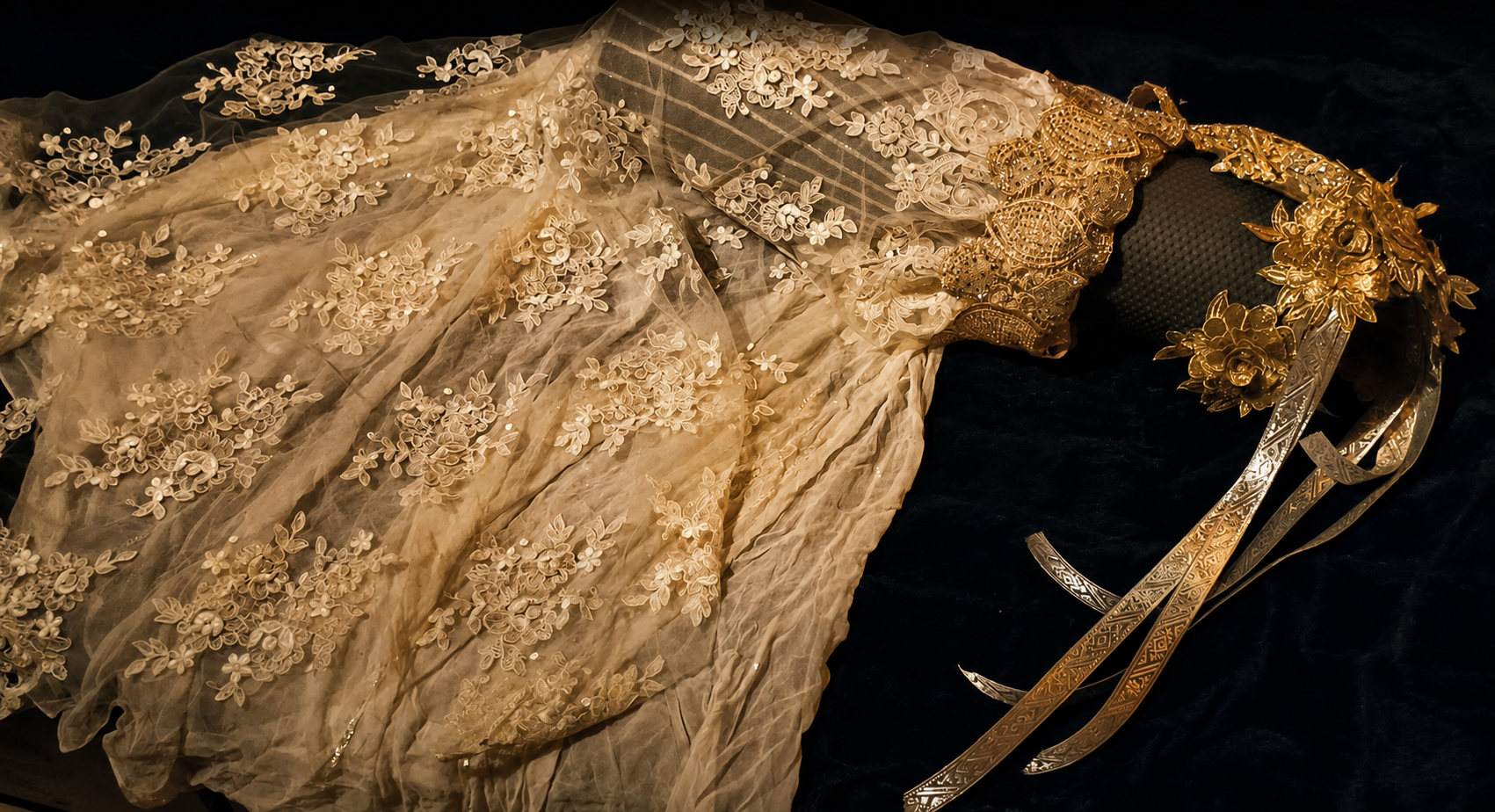
When she died, I sewed her a burial shroud. It was one of those gestures that cannot be fully explained to someone who sees in them only a piece of cloth. For me, however, it wasn't a piece of cloth. It was the final image. The final care. The final touch. The final way to dress someone with love when you can no longer do anything else for them.
And at that time I was publicly saying that while doing so I was channeling my inner Sharon Gilham.
There was exaggeration in it. But it wasn't a joke.
Because even a shroud is a costume.
Not a costume as a disguise.
Costume as the last picture.
Fabric on a body that no longer needs anything, yet a person needs to do something dignified one last time. Something beautiful. Something useless in a practical sense, and precisely for that reason, human.
Ever since, Sharon Gilham hasn't returned to me as a fashion model, but as a certain way of thinking.
In an interview for Magpaper, she described The Wheel of Time as "grounded fantasy" — a fantasy the viewer is meant to believe in, as if the characters truly existed in another dimension. At the same time, she says there that costume storytelling begins for her with the character and how they fit into the film or series; everything she designs is meant to serve the character.
Magpaper interview with Sharon Gilham:
https://www.magpaper.digital/magpaper/meet-sharon-gilham-the-costume-designer-behind-the-wheel-of-time-episodes-1
That is exactly what interests me.
Not fantasy as an escape.
Not a costume as a disguise.
Not fashion as decoration.
But clothing as proof that the world has rules.
And now I stand before Svět knihy.
On my website, I write that in May 2026 I will take part in the international book festival Svět knihy Praha, that I will be exhibiting at Výstaviště Praha in Křižíkovo pavilon D, at the collective exhibition of independent publishers, booth number KD004. I also write there that at the booth there will not only be books, but also materials for the PNVNY Universe project, which connects literature with musical soundtracks inspired by the books.
My page for Svět knihy Praha 2026:
https://endralon.space/antonin_delis_na_veletrhu_svete_knihy_praha_2026/
And that is exactly why I do not want to arrive merely dressed decently.
I do not want to look like a writer who has shrunk so as not to disturb.
I don't want to pretend that my work is less dark, less physical, less ornamental, or less personal than it truly is.
My books are about death. About loss. About bodies. About desire. About love that isn't neat. About people who don't fit into a more acceptable version of themselves. About light that doesn't appear because everything is fine, but because someone sits in the dark long enough and starts to notice where it breaks.
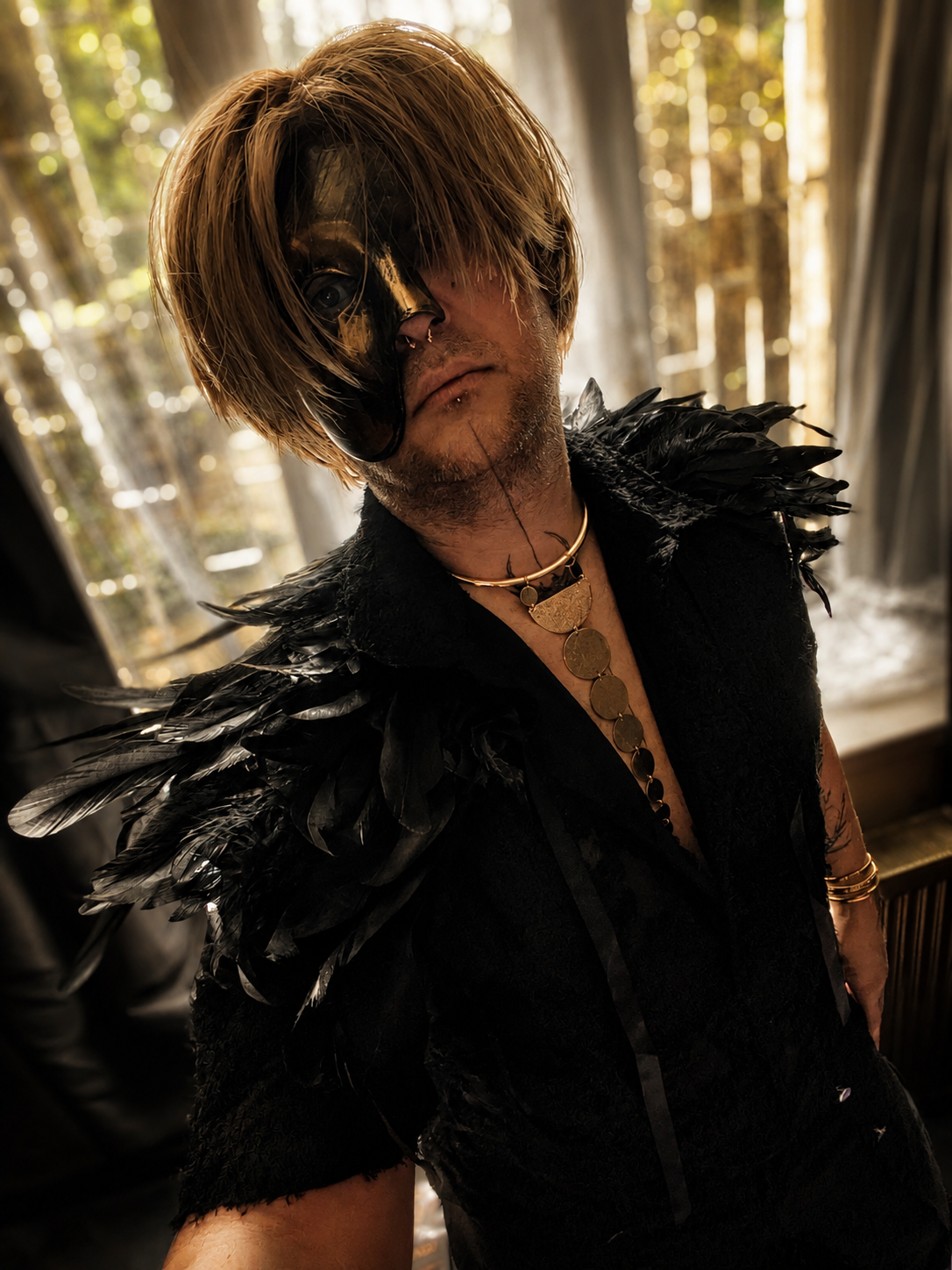
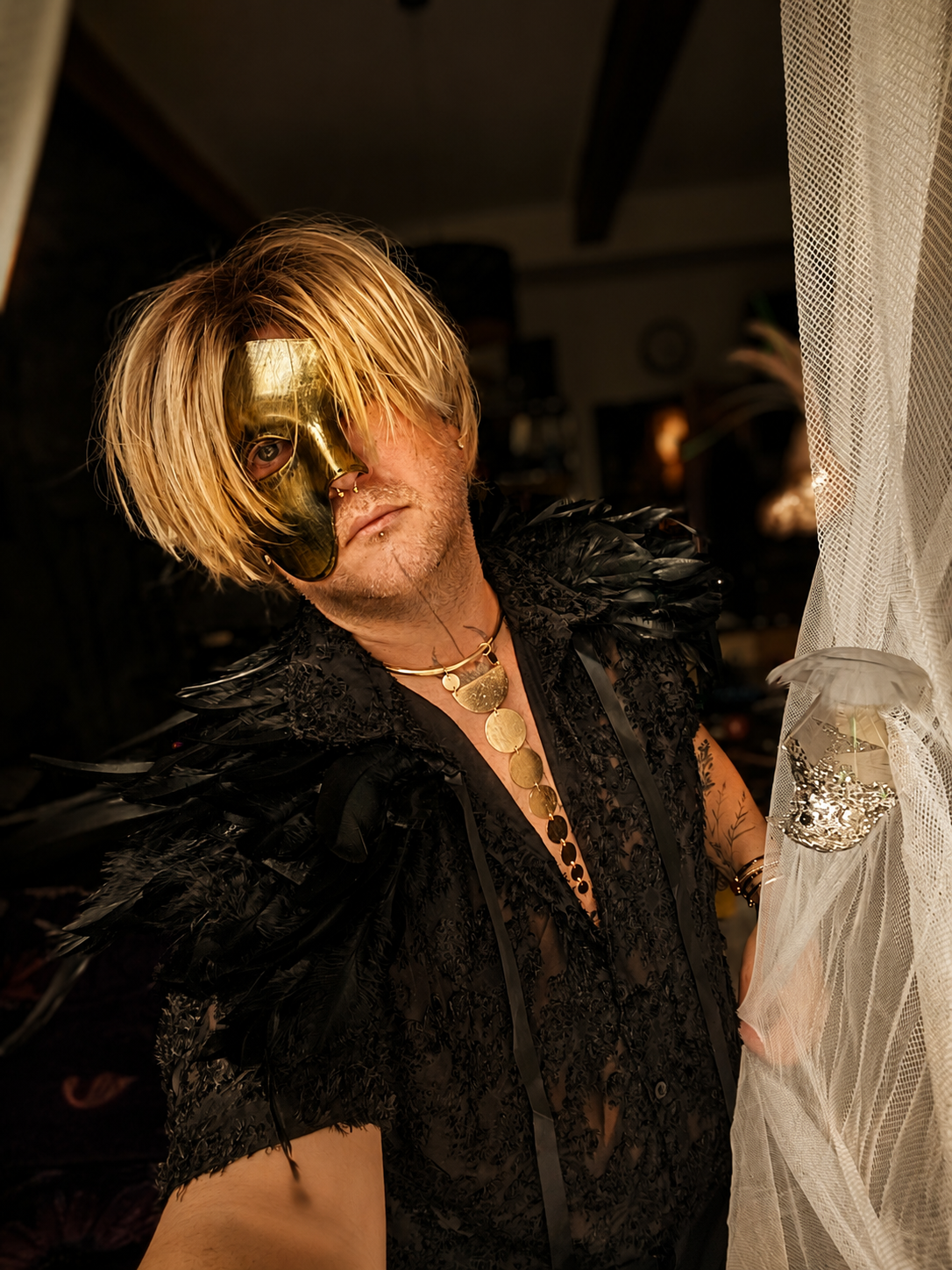
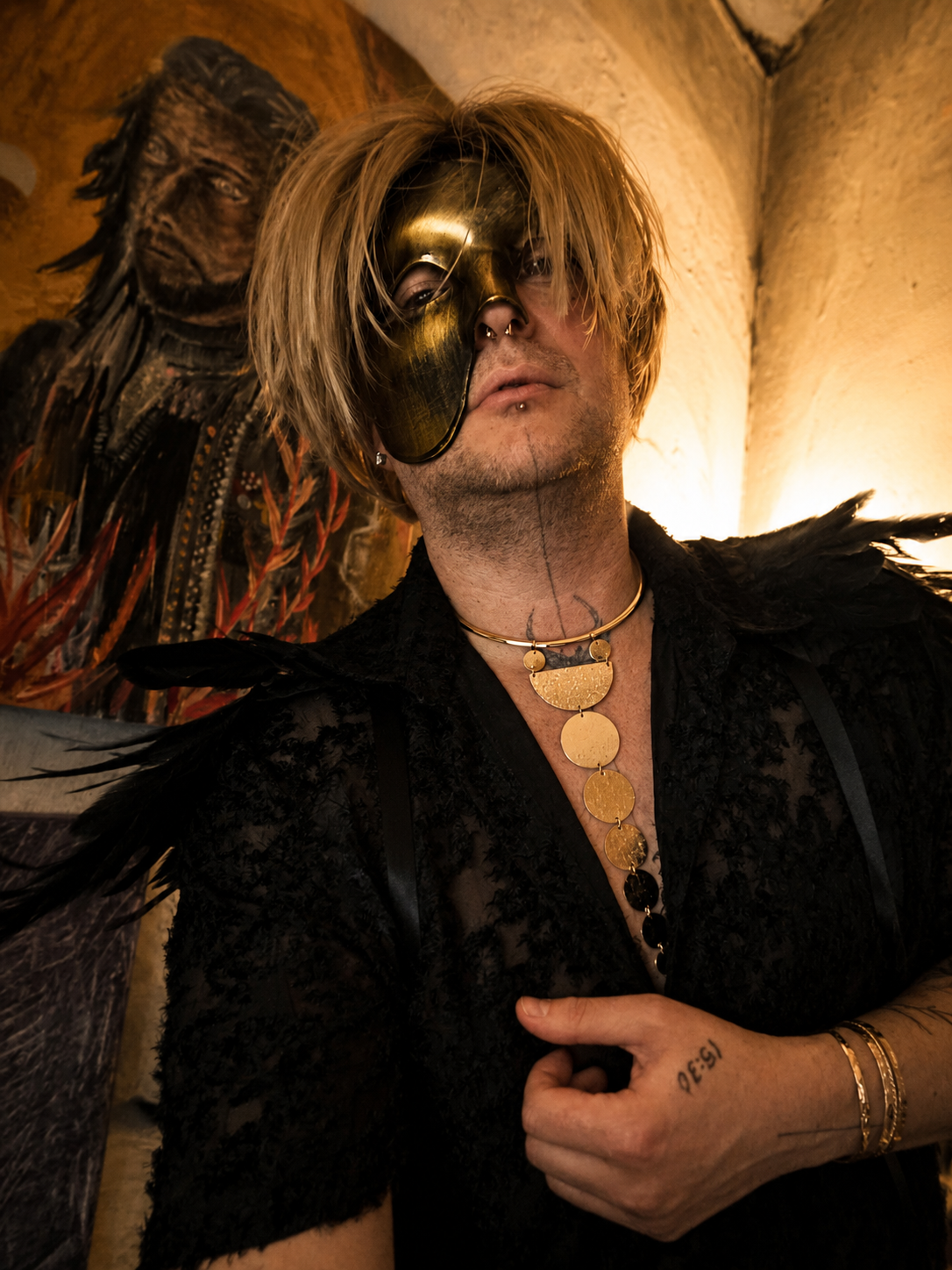
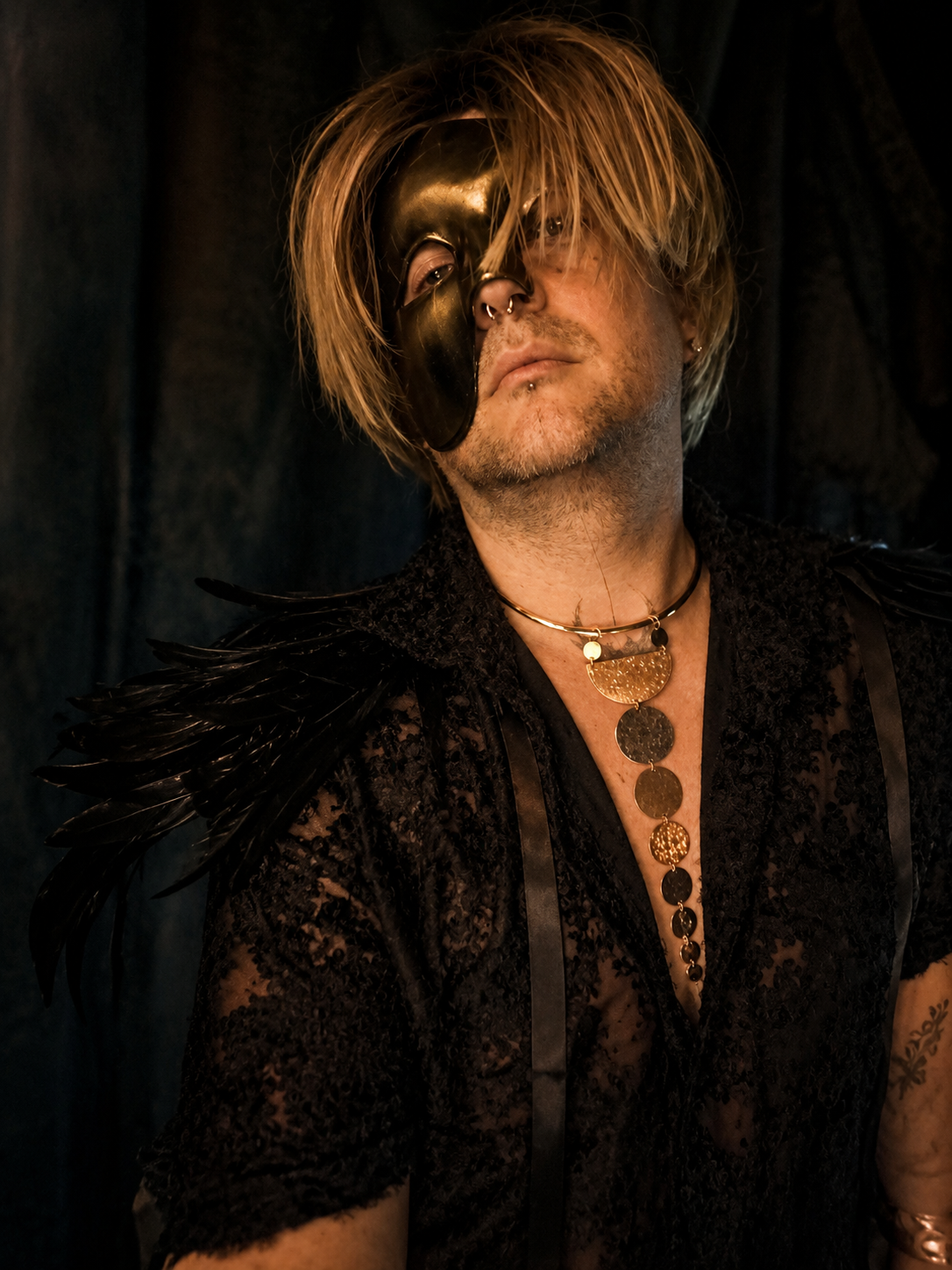
That is why I think of an outfit not as a "look", but as an entry into my own world.
I don't want to copy Sharon Gilham's costumes.
I don't want to dress up as a character from The Wheel of Time.
I don't want to borrow someone else's world.
I want to build on a way of thinking.
Of course, I don't know what Sharon Gilham herself would think about all of this.
Maybe she would roll her eyes in despair at my small budget, improvisation, and orders from Temu. Maybe she would take a breath in the exact way a person does who has spent their whole life working with material, craftsmanship, a team, time, and technical precision—and suddenly sees someone trying to manufacture their own little auteur myth out of whatever is at hand.
But for this once, I am choosing this way.
Not because I cannot see the difference between a couture costume and a self-published outfit pieced together from limited options. I see it very clearly. That is precisely why I am writing about it.
Except this is my situation. My budget. My body. My booth. My trip to Svět knihy. My attempt to turn a minimum into something that won't feel like an apology, but like a decision.
And from the brief personal experience I have with Sharon Gilham, as well as how her work and presence struck me, I do not think she would look down on a person trying to create an image from very little. I sensed in her a profound humility toward the craft, toward the people surrounding the costume, toward the hands that make, alter, dirty, repair, and hold things together.
Perhaps she wouldn't dwell on where every single piece of fabric came from, then.
Perhaps she would ask instead whether that image serves the world it is meant to carry.
And that is the question I am asking myself, too.
A layer like memory.
Materiál jako znak.
A silhouette as a stance.
A mask as the boundary between the body and the world.
Ornament as speech, not as decoration.
Patina as proof that a thing does not live outside of time.
When thinking about my own body at Svět knihy, I am not concerned with a clean, perfect, polished image. Quite the contrary. I am considering using twenty-four-karat gold leaf on parts of the body — not as jewelry, not as a luxury effect, but as veins, cracks, tiny traces of light on the skin.
Something between an icon, a broken statue, a body after a ritual and a designer brand.
Gold not as wealth.
Gold as patina.
As a reminder that even dark things can carry light if someone looks closely enough.
Perhaps this is precisely where everything meets for me: on set Wheel of Time, the exhibition at Mánes, the shroud for Amálka and Book World.
On set, I saw how a body becomes part of the world through costume, patina and detail.
At Mánes, I saw how costumes hold up even outside the camera as independent objects of human labor.
At Amálka's, I understood that fabric can be the final gesture of love.
And at Svět knihy, I want to find out whether an author can become the first page of their own world.
Not to draw attention to themselves at any cost.
But so as not to lie.
Because the author's body is also a message.
The reader will see me before they pick up the book. Before they scan the QR code. Before they read the synopsis. Before they understand what the PNVNY Universe is, why soundtracks are created for the books, why there are prophecies, posters, music, ornament, silence, death, desire, and exaggeration in it all.
They will see the body.
And I don't want that body to say: I'm sorry, I'll try to be more normal.
I want it to say: here I am, complete.
With my books.
With my death.
With my sadness.
With my ridiculousness.
With my darkness.
With my gold.
With my inner Sharon Gilham.
Once I sewed a shroud for dead Amálka.
Now I am dressing myself for a book fair.
And between these two gestures there is not as big a difference as it might seem.
In both cases, it is about an image.
In the one, the last.
In the other, the first.
And perhaps that is precisely why clothing is not fashion for me.
It's a way to give the body the truth before it speaks.















