
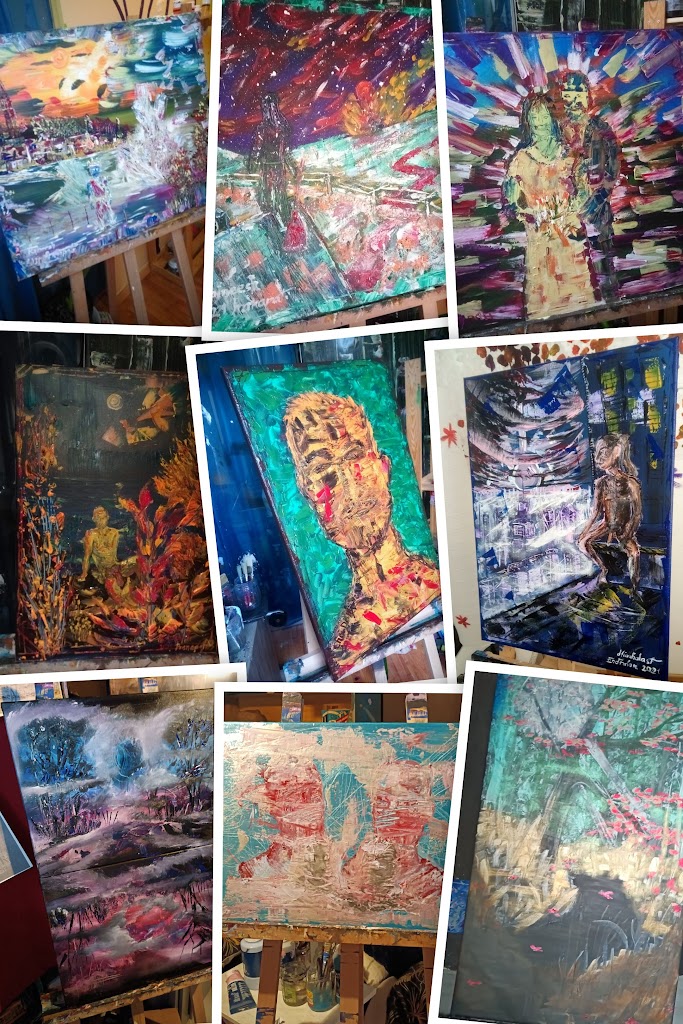
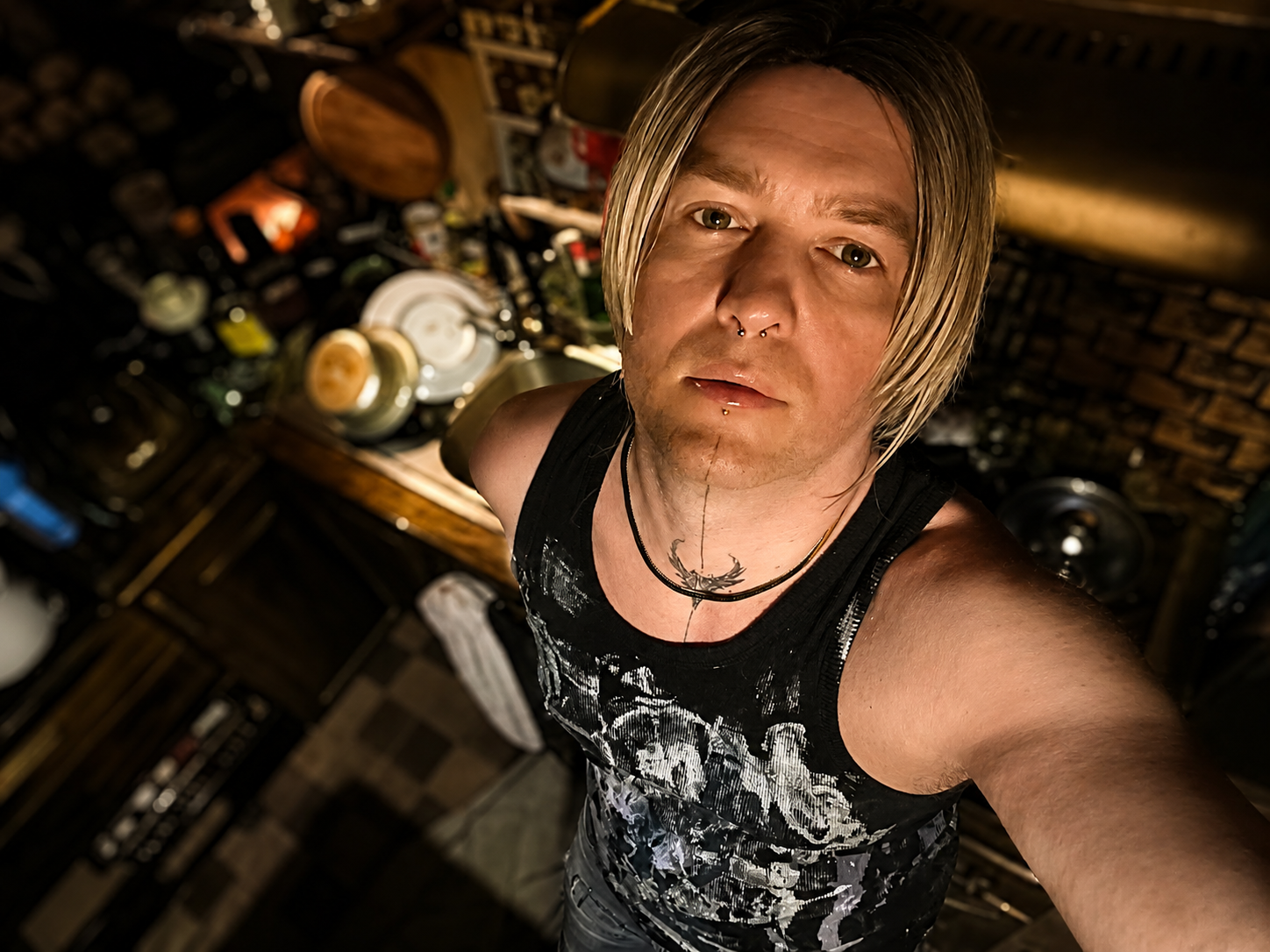
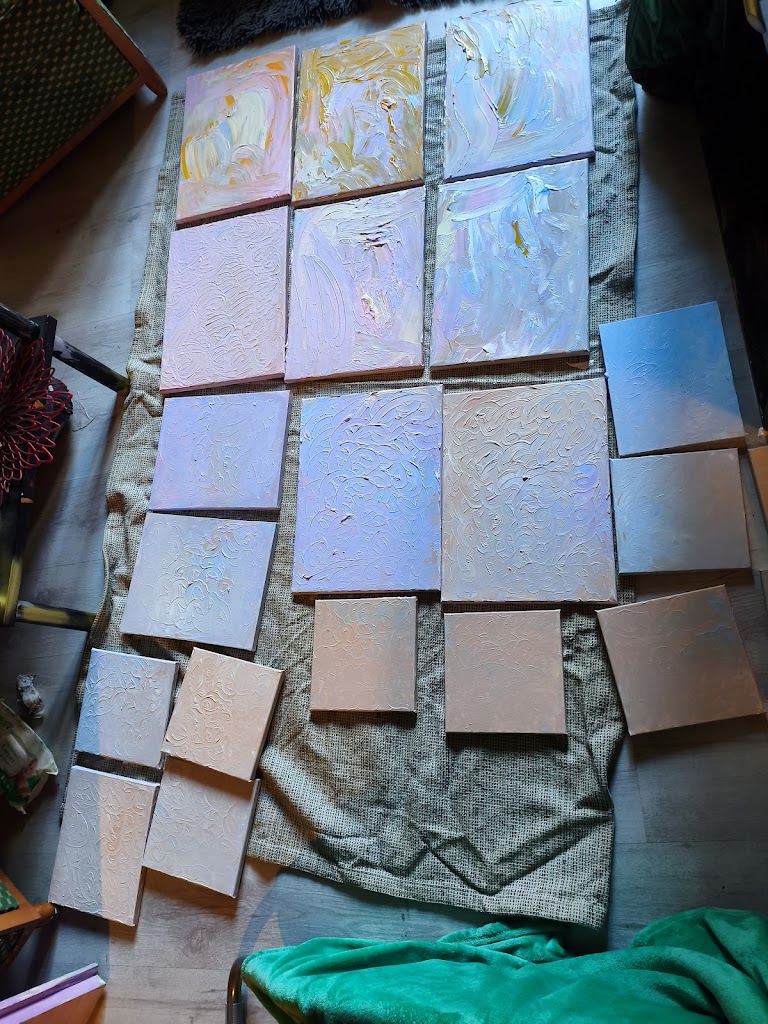
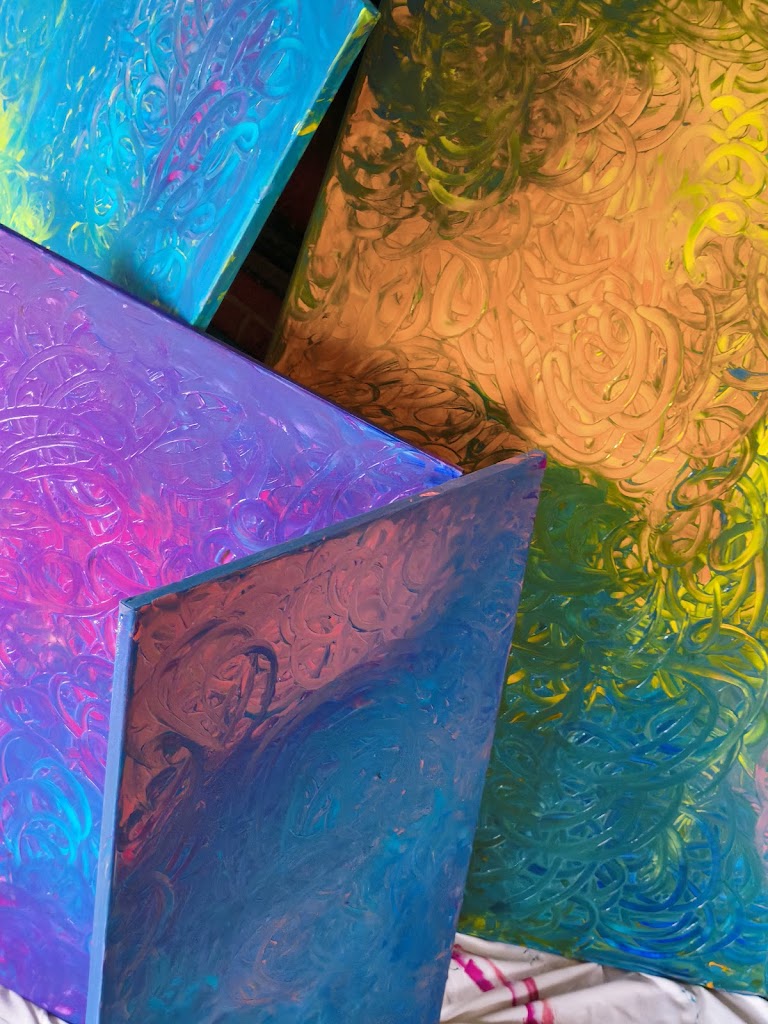
Antonín Deliš is a heavy contemporary artist whose work connects literature, music, and fine art. He is the author of nearly a hundred paintings – from intimate portraits to abstract landscapes and extensive cycles like Healing Crooked Manhood. In an interview conducted by artificial intelligence, he speaks of painting as the light that guided him through mourning, the energy of houses, death, eroticism, and why certain paintings outlive their creator.
"If it weren't for painting, I don't think I'd be here today."
Your work includes books, music, and paintings. What does painting mean to you?
It's interesting that you ask it quite like this, because a painting immediately popped into my mind Dangerous Lover. It's one of the first paintings I ever painted.
And it actually reminds me of the time when I was convinced that I would paint. Not write. Not compose music.
Today I am rather convinced that I will write. And lately, perhaps, I create music even more.
When I look back, however, painting meant a transition from something to something else for me. It was a light. It led me out of grief and depression. It gave me the taste and strength to keep going.
If it weren't for painting, I don't think I'd be here today.
Writing, for instance, has never had this in my life.
Is painting, then, a different language than literature and music?
Undoubtedly.
It is a different language. But at the same time, I feel that all those languages ultimately tell of the same world.
Only each a little differently.
"Painting was light for me. Not just creation, but literally light."
How are your paintings created today?
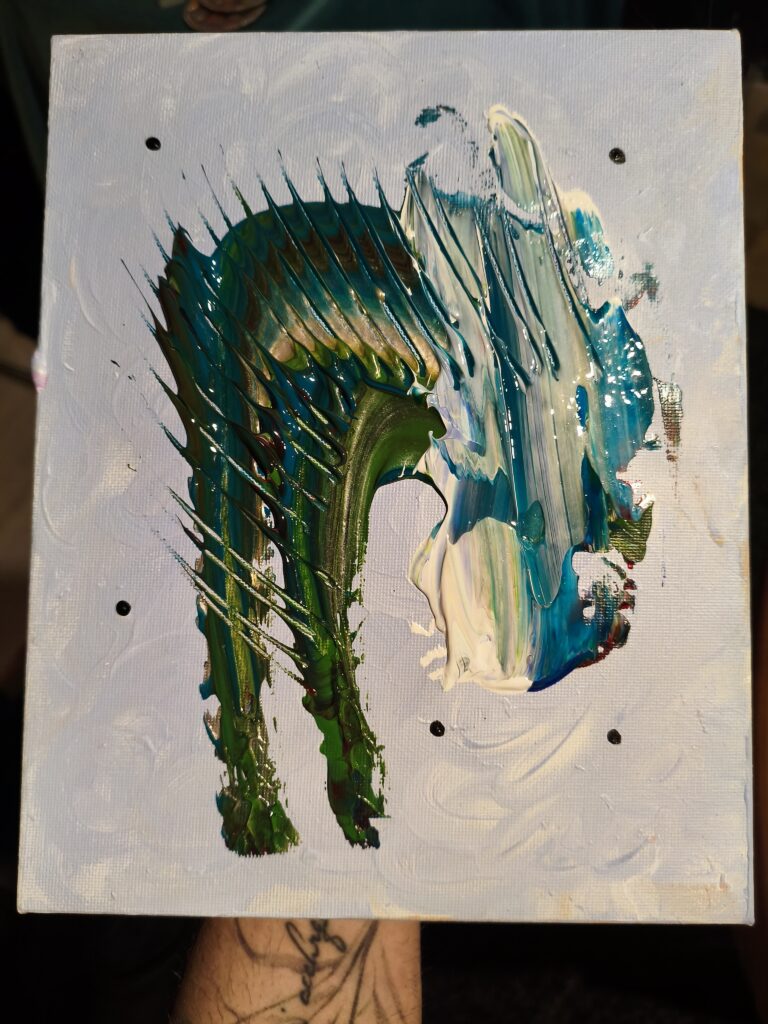
It's interesting that you said 'I take a brush in hand', because today I often start completely differently.
First I pour the paint.
I use my hands.
I create texture.
And only after that does the brush come in.
I am talking about my own work now, not commissions. When I paint for myself, physical contact with the material is important to me.
Do you think beforehand about what will emerge?
Not at all.
I am in the process.
I don't think ahead.
In recent years, I've experienced several strange periods – bursts of energy like that. I started painting several canvases at once, and only then did it begin to dawn on me what was actually supposed to emerge on them.
That is how, for example, Rodinné sídlo was created.
And the series was created in a similar way Healing Crooked Manhood.
It wasn't a plan.
The theme was simply hanging in the air.
“Sometimes a theme hangs in the air before a person can name it.”
How do you know when a painting is finished?
It's simply a feeling.
You look and you know.
You don't think about it.
But the process doesn't end there.
I let the paintings live in the space for several days. I observe what they do to me. What resonates within me. And only then does the naming come.
For me, the title is actually the completion of the painting.
Interestingly, with books I have it the exact opposite. There, everything usually starts with the title.
Healing Crooked Manhood
"Distorted masculinity is not a men's problem. It's a problem of relations between energies."
Series Healing Crooked Manhood belongs among your most prominent cycles. How did it come about?
It came about after spending a few days at a female friend's place before Christmas, when I was dealing with the theme of a family estate and gathering energies directly in her house.
And that was when I realized that warped masculinity is not just a matter for men.
It arises from the clash between the male and female worlds.
It arises the moment we drift away from our own truth.
When we allow fear to control us.
When a woman abandons her feminine energy or a man his masculine one.
When we stop connecting with ourselves.
For me, those images were an attempt to return energies to where they belong.
There are also cards of gods and goddesses on your website. Is that related to this topic?
Yes.
It is actually a long and slow realization of these things.
Not only through images, but also through symbols.
Rodinné sídlo was created
The collection Rodinné sídlo was created feels very personal. How was it created?
Because it is personal.
For a time, I was very involved in what I called spatial psychotronics—moving furniture, releasing emotional blocks, working with space.
When I was at a friend's place, it wasn't about the paintings at first.
First, it was about harmonizing energies.
Helping things set into motion.
And only then did space for images emerge.
Those images had no decorative function.
They were supposed to help create the energy of a home.
Because without paintings, the house was cold.
Maybe that has something to do with my childhood, too.
I grew up in a large villa and we weren't allowed to hang our own posters or our own things.
And perhaps that is why I believe that large houses need a lot of paintings.
To warm them up.
"Large houses need paintings. To warm them up."
Beyond the limit of knowledge
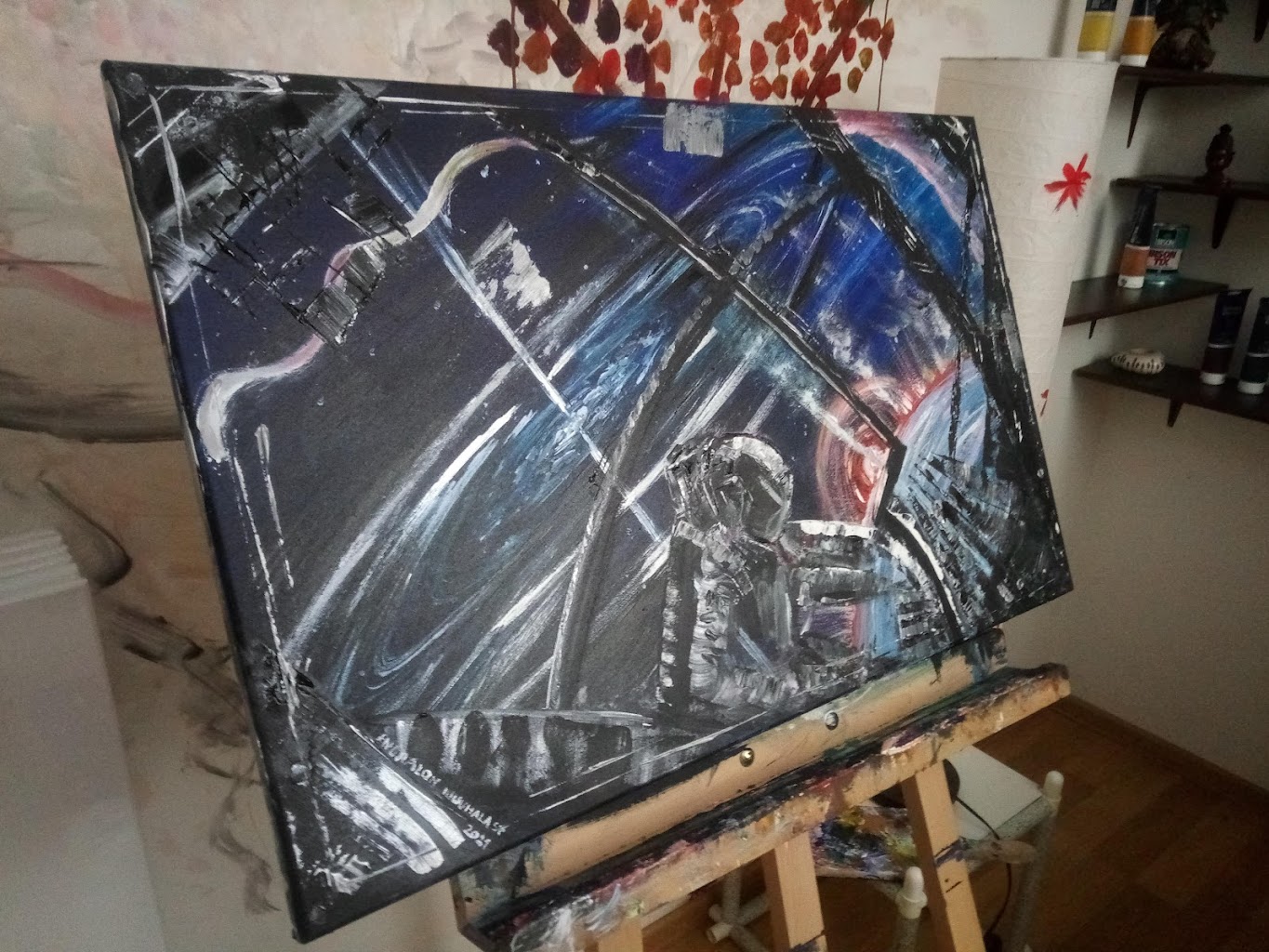
The painting Beyond the limit of knowledge feels unexpectedly restless. What do you see in it?
Actually, I was never entirely fond of that painting.
I wanted to paint the universe.
I wanted to see into another dimension.
But I had no idea an astronaut would appear there.
I had no idea we would be observing him.
And that image still evokes unease in me to this day.
It's not safe.
You have nothing to hold on to.
You are in a space that is fatal to man.
And the most interesting thing is that the cosmonaut pays no attention to the most important thing.
Worlds are opening up behind him, but he is dealing with something else.
It reminds me of a person sitting at home behind a computer, missing the bigger picture of the world.
„We see more than an astronaut. And that is precisely what creates unease.“
Excited warrior on horseback
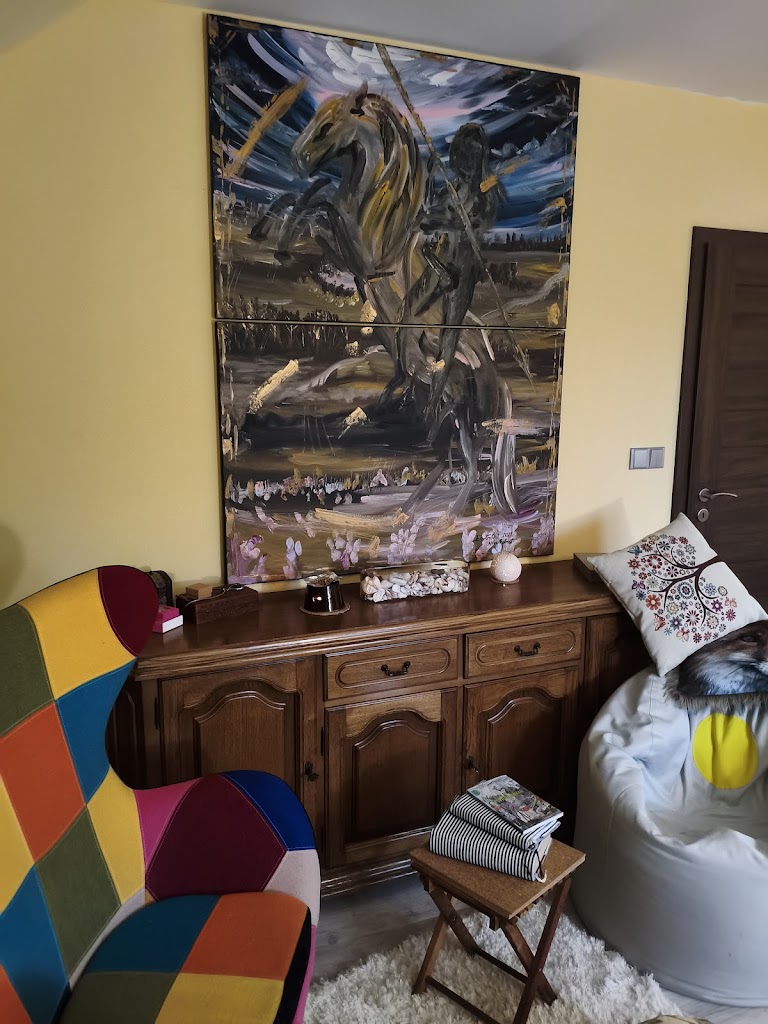
One of your strongest images is Excited warrior on horseback. What does it mean to you?
It was important for me to throw away a certain kind of morality.
Malovat nahého bojovníka.
To paint an excited horse.
But for me, that picture isn't erotic.
It is an allegory of death.
During mourning, death was taking away my sexual energy.
And that rider and horse are actually the personification of death.
That is why the painting is so dark and dramatic.
When the painting surpasses the author
"A painting can be smarter than the painter."
Is there a painting that surprised you the most during its creation?
Yes.
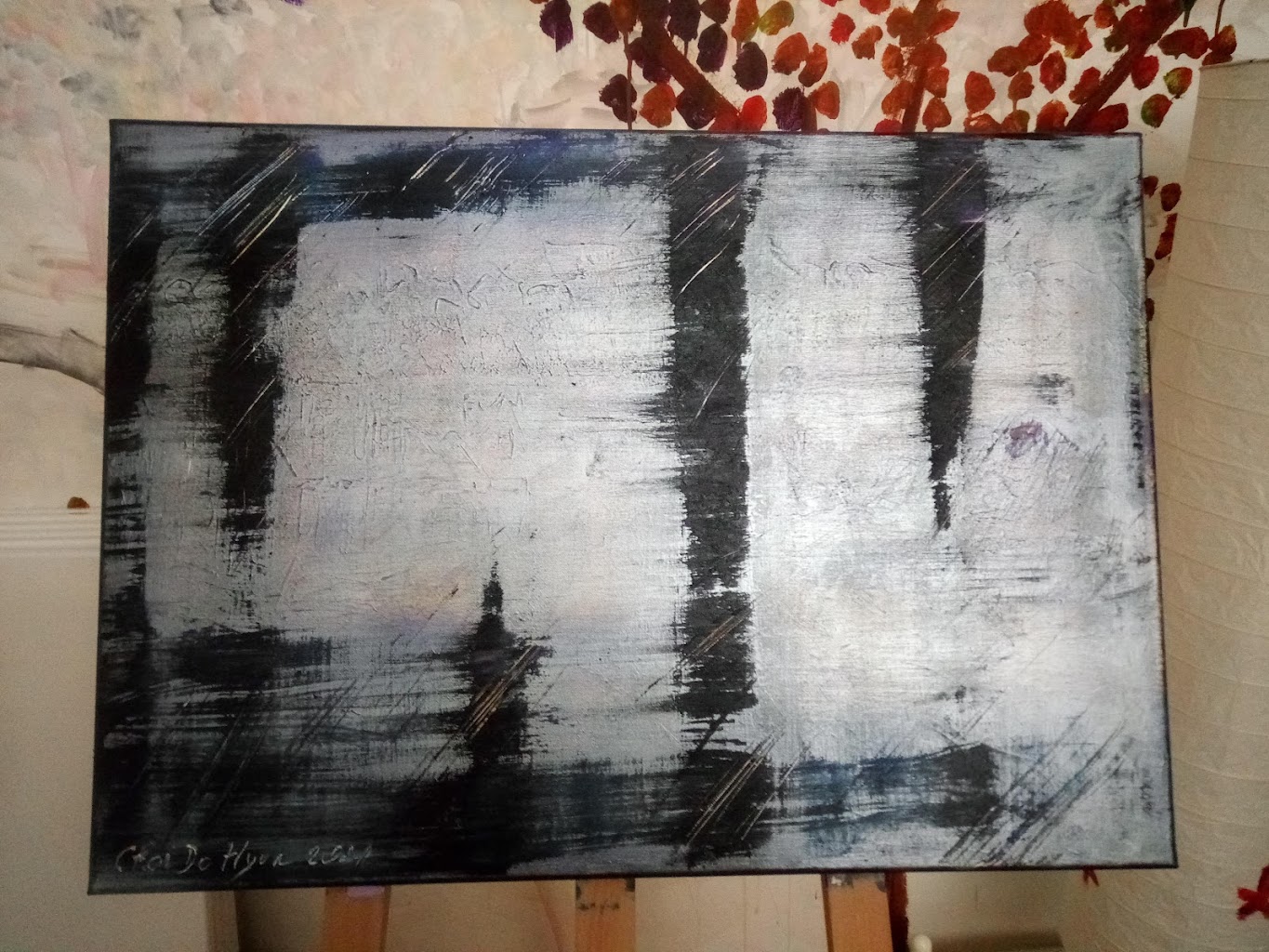
The Disappearance of Hercule Poirot.
While painting it, I was often angry. I had negative feelings.
And it was then that I realized a painting can crystallize into something much better than my original intention.
To this day, it is one of my favorite paintings.
I feel that it surpassed me.
I even signed it with the signature Cheotoa – Choido Hyun, which is my Korean alter ego. A name given to me a long time ago by a Korean person.
I spent a tremendous amount of time with that painting.
Several layers and several versions were created.
And it showed me that a painting can transcend its author.
Is there also the opposite case – a painting that didn't reach where you wanted it to?
Yes.
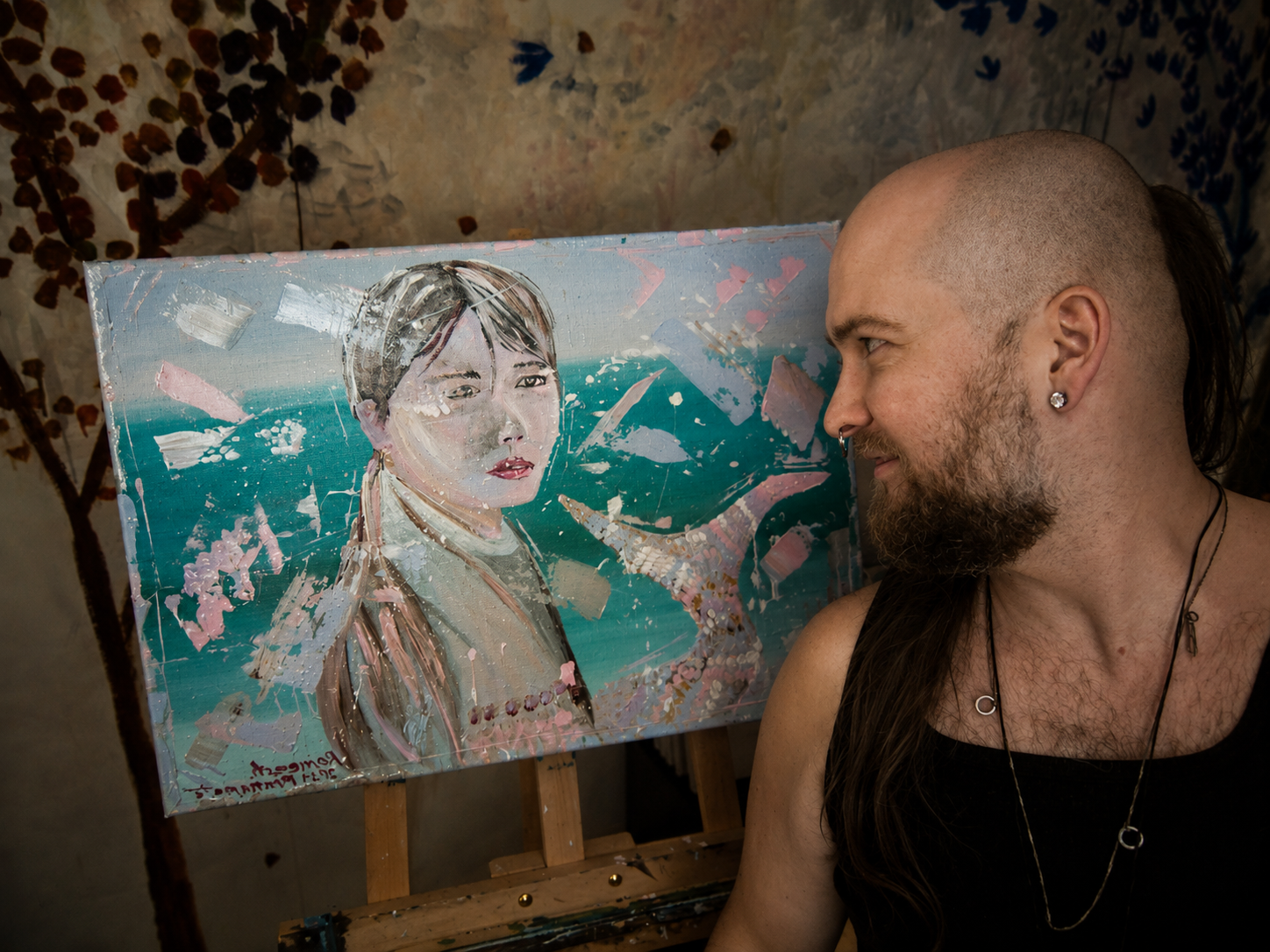
Perhaps The Little Mermaid.
There I had a very specific vision and the painting didn't live up to it.
But it taught me something else.
That sometimes we degrade an image – and precisely thereby paradoxically elevate it.
Vertigo
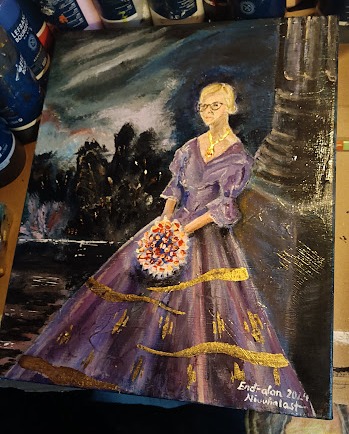
In your gallery there is also Vertigo – Portrét Ludmily. How did that painting come to be?
That's a beautiful example of how paintings come to be.
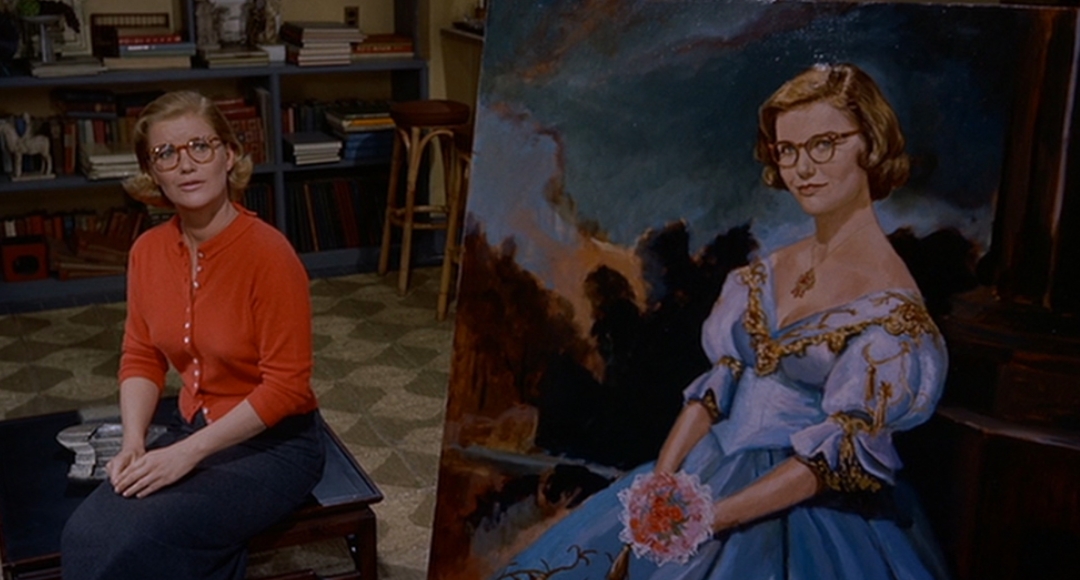
I was at work and a female colleague suddenly reminded me of a character from Hitchcock's Vertigo.
And she herself was painting a replica of a painting at the time.
So I was actually painting a replica of a replica.
I like moments when film, reality, and memory connect and something new is created.
What would you wish for people to take away from your paintings?
I don't think there is a single correct interpretation.
It is enough for a person to pause.
And to find something of their own in the painting.
Because sometimes a painting knows more than its author.
The interview was created in 2026 based on a live dialogue between Antonín Deliš and artificial intelligence regarding his artistic work, paintings, and creative process.















